Publishing
How a game made at home reaches other countries
You put the game in the store once, and it shows, charges and pays out in dozens of currencies. Telling the world the game exists is still up to you.
SUMMARY FOR WHEN YOU'RE SHORT ON TIME · 2 min
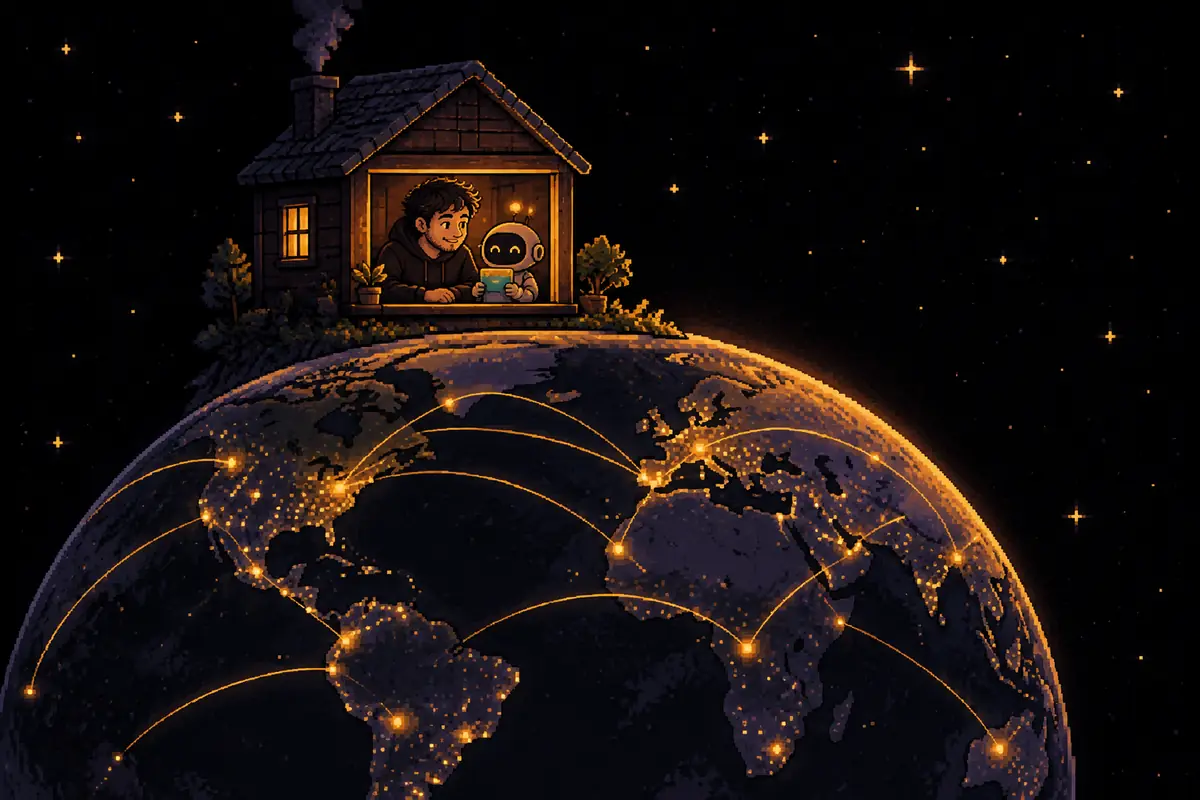
A game made at home reaches other countries through the store: you publish once and choose where it shows up. Google Play's official list has 177 countries and regions with their own row, plus a rest of world option, and it charges players in their own currency. But being in the store does not bring players, and translating the page and promoting the game are still on you.
- In Google Play's official list of September 28, 2026, we counted 177 countries and regions with their own row, plus a rest of world option that includes another 48 places.
- The publisher chooses the countries, and what counts is the country of the player's store account, not where they are at the moment.
- In Brazil, the price of a game or an in-game purchase on Google Play can range from R$ 0.30 to R$ 5,200, in Brazilian reais.
- Google Play lets you translate the game's page yourself, buy professional translation for US$0.07 per word, or use a free machine translation.
- On Steam, more than 60% of people use the store in a language other than English, according to Valve.
- Google pays around the 15th what was sold in the previous month, into a bank account in the same country as your seller account.
- Among Us, made by three people in 2018, only took off in 2020, when people in South Korea and Brazil started showing the game online.
Your first step: Open Google Play's official list of countries and write down three places, besides your own country, where you would like to see your game, with each one's currency.
How does a game published in Brazil reach other countries?
Through the store. You put the game in the store once and select the countries where it appears. The store shows the game to people who live there, charges players in their own currency and pays out your share12.
You do not have to mail anything or open a company in each country. The store is the bridge: Google Play, on Android phones, and Steam, the biggest store for PC games. This page uses both as examples, with what the official pages said in October 2026.
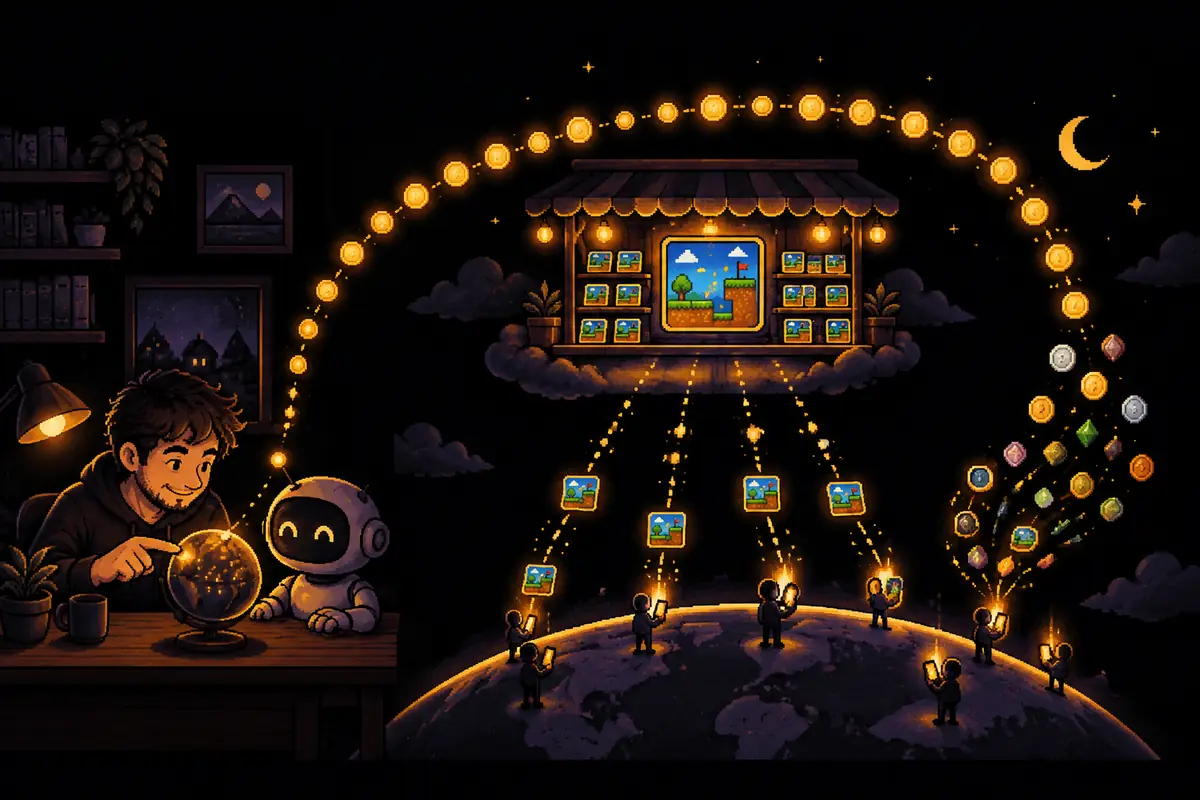
What the store does not do is tell the world your game exists. The story of Among Us shows that difference well.
How did Among Us reach players all over the world?
Slowly, and through the people who played it. Among Us came out for phones on June 15, 2018, made by three people, according to the company itself, Innersloth78. The game was in the stores from launch, but the wave of players only came two years later8.
By January 2020, the team already considered the game complete7. Then, in mid-2020, it became a craze, and the first spark came from far away: video creators in South Korea and Brazil started showing the game online8. One of the creators, Marcus Bromander, said the game was more popular in Mexico, Brazil and South Korea than in the United States, according to Wikipedia8. In November 2020, according to the company, almost 500 million people played in the month7.
Among Us is from 2018 and was not made with AI. It is one case that worked out among many that did not, and it is no promise. The full story is in famous games that started small.
In our reading, the lesson is that the game had been in the store since 2018, and what changed was that people in other countries started talking about it.
In how many countries does Google Play distribute a game?
In Google Play's official list, in the version published on September 28, 2026, we counted 177 countries and regions with their own row. There is also an option called "Rest of world", which includes another 48 places at once1. The count is ours, done on the open page.
For each place, the list says three things: whether people can download free games, whether they can buy, and which currency they pay in1. It is not the same everywhere. In five countries on the list (China, Cuba, Iran, Russia and Sudan), people can download free games but cannot buy through the store1.
You decide where the game appears, in the store's dashboard for publishers, the Play Console. You can add or remove countries later2. A detail that catches many people: what counts is the country where the player's store account is registered, not where they are at that moment2. To the store, a Brazilian on vacation in Portugal is still from Brazil.
| What | Number | Source and date |
|---|---|---|
| Countries and regions with their own row on Google Play's list | 177 (our count) | Google Play1, version of 09/28/2026 |
| Places included in the "Rest of world" option | 48 (our count) | Google Play1, version of 09/28/2026 |
| Countries on the list where you can download for free but not buy | 5 (our count) | Google Play1, version of 09/28/2026 |
| Price range in Brazil | R$ 0.30 to R$ 5,200 | Google Play1, version of 09/28/2026 |
| Currencies Steam shows prices in | 37 | Valve6, October 2026 |
| Languages with full official support on Steam | 29 | Valve4, October 2026 |
| People who use Steam in a language other than English | More than 60% | Valve4, October 2026 |
The step-by-step for putting the game in the Android store, with the account, the test and the forms, is in how to publish a game on Google Play.
Who charges the player abroad, and in what currency?
The store does, in the currency the player sees. In most places on Google Play's list, it is the local currency; in some, the price appears in dollars or euros1. In Brazil, a game or an in-game purchase can cost from R$ 0.30 to R$ 5,200, in Brazilian reais1.
You do not have to work out the price in each currency. On Google Play, when a paid game gets a new country, that country's prices are added automatically, and you can change them if you want2.
On Steam, prices exist in 37 currencies6. Valve, the company that runs the store, suggests a price in each currency based on the price you set in dollars, and you accept or change it6. One of the conversion methods the store offers takes into account people's purchasing power in each country, not just the exchange rate6. Valve says the pricing decision is entirely yours6.
In our reading, this matters for anyone living in Brazil: a price that looks low in dollars can be high in reais, and the other way around. Looking at the suggested price in each currency before launch avoids surprises.
Do I need to translate the game to sell in other countries?
It is not required, but it helps a lot. Translating the game and the store page, which in the industry is called localization, lets someone abroad understand what they are buying.
On Google Play, you can write the game's page in other languages yourself, buy professional translation through the dashboard, or use the store's machine translation at no cost3. Professional translation cost US$0.07 per word, ready in seven days, in October 20263. Anyone who opens the page in a language you translated sees the translated version3. If you did not translate it, the person may see a machine translation, with a notice at the top3. Google itself warns that these machine translations are not reviewed by professionals3.
The store also offers to translate the text inside the game with Gemini, Google's AI, at no cost3.
On Steam, translation has two separate parts: the store page (description, images and videos) and the game itself, with subtitles, on-screen text or full audio4. The language that counts as "supported" is the game's, not the page's4. Valve says more than 60% of people use Steam in a language other than English, and that the store favors translated products4.
Steam's monthly survey shows which languages people use. In September 2026, English had 34.2%; Simplified Chinese, 31.4%; Russian, 9.1%; Spanish from Spain, 4.1%; and Brazilian Portuguese, 3.7%5. These numbers change a lot from one month to the next: Simplified Chinese rose more than 7 points compared with the previous month5.
In our reading, the cheapest way to start is to translate the store page first into the languages where you want to appear, and ask someone who speaks the language to check it. If language worries you when making the game, see whether you need to speak English to make a game with AI.
How does the money from sales abroad reach you?
Through the store, once a month. On Google Play, what was sold from the 1st to the last day of a month is paid around the 15th of the following month, and the bank may take a few days to credit it9.
The money goes into a bank account you register in your payments profile. The account must be in the same country where your seller account is registered, and use the country's currency or US dollars, depending on the place10. In some countries, Google pays in dollars by international wire transfer, and then the minimum balance to get paid is US$100; for those paid in local currency, the minimum is US$1911.
Each country may have its own requirements. To sell in Brazil through Google Play, the store may ask for details about the business and the people in charge, and Brazilian companies also send their CPF and CNPJ, the Brazilian tax ID numbers12.
Receiving money from abroad may come with tax rules, and this page does not cover them. Before your first payment, talk to an accountant.
Why isn't being in another country's store enough?
Because the store shows the game to people who search, but it does not make anyone search. Among Us spent almost two years in the store before people abroad started talking about it78.
Selling abroad is already a large part of the business for game makers in Brazil. According to Abragames, the association of Brazilian game companies, 55% of Brazilian studios' revenue already comes from foreign markets, in data released in August 20261314. This number has a limit, because it is about studios, which are companies with teams, and it says nothing about how much a game made by one person at home sells.
In our reading, what changes for beginners is the order of the questions. Before "how many countries will the game be in" comes "how will someone out there know it exists". A short video of the game, the translated page and the Steam wishlist are ways to start. The store is already packed with games, as we show in are there too many games already?.
The other side
Putting the game in 177 countries does not bring players from 177 countries. Most games sell little, in any store, and nobody can promise that yours will sell at home or abroad. Translating costs time or money, and machine translation without review can leave mistakes on the page. The rules of each store and each country change: Google Play's list has a version and a date, and the requirements to get paid also change. And money from abroad brings obligations this page does not cover: take your situation to an accountant.
Your action plan
Check off what you've done. It's saved on this device, so you can pick up where you left off.
Related questions
Can a game published in Brazil be downloaded in other countries?
Yes. On Google Play, the publisher selects the countries and regions where the game appears, and can select almost the whole world. What counts is the country of the player's store account.
In how many countries does Google Play distribute a game?
In the official list published on September 28, 2026, we counted 177 countries and regions with their own row, plus the "Rest of world" option, which includes another 48 places. The count is ours.
Do I need to open a company abroad to sell abroad?
In the Google Play pages we read, no: the store handles sales in the countries you select and pays into a bank account in the same country as your seller account. Anyone selling in Brazil may have to send details about the business and the people in charge to get paid.
What currency does a player abroad pay in?
In most places on Google Play's list, the local currency; in some, the price appears in dollars or euros. On Steam, prices exist in 37 currencies.
Do I need to translate the game to sell in other countries?
It is not required, but it helps. Google Play shows the translated page to people whose phone is set to that language, and Valve says Steam favors translated products.
When does the money from Google Play sales arrive?
Orders from one month are paid around the 15th of the following month, according to Play Console Help, and the bank may take a few days to credit it.
Do I need an accountant to get paid from abroad?
Before the first payment, yes, it is worth talking to one. This page explains what the store does, not the tax rules, which depend on your situation.
Sources
- Google Play, supported locations for distribution to users (version of 09/28/2026). Accessed October 15, 2026.
- Play Console Help, distribute app releases to specific countries. Accessed October 15, 2026.
- Play Console Help, translate and localize your app. Accessed October 15, 2026.
- Steamworks, "Localization and Languages". Accessed October 15, 2026.
- Steam, "Steam Hardware & Software Survey: September 2026" (languages). Accessed October 15, 2026.
- Steamworks, "Pricing". Accessed October 15, 2026.
- Innersloth, Among Us press kit. Accessed October 15, 2026.
- Wikipedia, "Among Us". Accessed October 15, 2026.
- Play Console Help, order processing and payouts. Accessed October 15, 2026.
- Play Console Help, enter merchant bank details. Accessed October 15, 2026.
- Play Console Help, wire transfer payouts. Accessed October 15, 2026.
- Play Console Help, requirements for distributing apps in specific countries and regions. Accessed October 15, 2026.
- Game Overdrive, on Brazil at gamescom 2026 (08/21/2026). Accessed October 15, 2026.
- Diário de Pernambuco, on Abragames at gamescom 2026 (08/21/2026). Accessed October 15, 2026.
Was this article helpful?
Thank you. This helps us decide what to improve.
Once a week, what changed in making games with AI
Every Tuesday, a 3 to 5 minute read: the news that changes something for people who want to make a game, one reader question answered, and the new articles. Unsubscribe anytime with one click.
By signing up, you agree to the privacy policy.
Done. We sent you an email to confirm.
That didn't work. Check that your email is correct and try again.
Found a mistake? Let us know. We fix it and log the correction on the page. Report a mistake