
Market
How much does a game make on Steam? Numbers on both sides
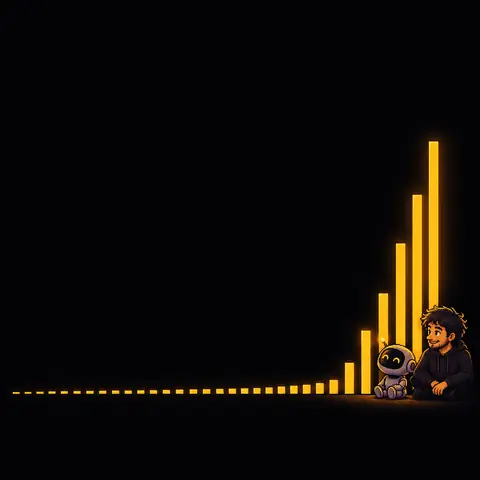
Half of the paid games from 2019 grossed less than $1,136 in their whole lifetime. In the same market, almost 6,000 games passed $100,000 in 2025 alone.

SUMMARY FOR WHEN YOU'RE SHORT ON TIME · 2 min
How much a game makes on Steam ranges from almost nothing to millions, and most land close to nothing. Among paid games released in 2019, half grossed less than $1,136 through 2022, by estimate. At the other end, 5,863 games passed $100,000 on Steam in 2025, according to Valve. And the store keeps 30% of sales.
- Among paid games released on Steam in 2019, half grossed less than $1,136 by the end of 2022, according to a VG Insights estimate analyzed by Chris Zukowski.
- In the same group, a game that grossed $10,000 was ahead of 68% of the others, and passing $1 million meant being in the top 4%.
- In 2025, 5,863 games grossed more than $100,000 on Steam, according to Valve, almost double 2020; the count includes games released before 2025.
- Steam keeps about 30% of each sale; its cut drops to 25% past $10 million and to 20% past $50 million.
- Putting a game on Steam costs $100, which comes back with your payout only after the game passes $1,000 in revenue.
- In 2025, 608 of the 20,282 games released reached 1,000 reviews, about 3%; according to Zukowski, that mark usually means more than $150,000 in revenue.
- In 2024, all the indie games released that year, leaving out Black Myth: Wukong and Palworld, grossed less combined than Black Myth alone, according to VG Insights.
Your first step: Run the numbers for your game with three figures: the price you would charge, how many copies you would sell in a modest scenario and how much is left after the store's 30%. Compare it with the median on this page.
How much does a game really make on Steam?
Not much, in most cases. Steam, the biggest store for PC games, does not disclose how much each game sells, so per-game numbers come from tools that estimate sales from public store data. The most careful estimate we found is by Chris Zukowski, author of the site How To Market A Game, using VG Insights data1.
He took every paid game released on Steam in 2019 and added up how much each one grossed through the end of 2022. The median, the game in the middle of the line, grossed $1,136 in its whole lifetime1. Half of the games came in below that. It is gross revenue: before the store's cut, taxes and any costs1.
The median is the number that matters here. The average revenue is much higher, because a handful of huge games pull the figure up, and it describes a game almost nobody makes.
| Estimated gross revenue, over the game's lifetime | Where the game ranks among those released in 2019 | Source |
|---|---|---|
| $1,136 | In the middle: half came in below | Zukowski, with VG Insights data1 |
| $10,000 | Ahead of 68% of games | Zukowski1 |
| $250,000 | Ahead of 91.5% of games | Zukowski1 |
| More than $1 million | In the top 4% | Zukowski1 |
The numbers apply to paid games; free games were left out of the count1. And they are from 2019. As of October 2026, nobody had published a median this well explained for games released later.
How much does Steam keep from each sale?
About 30%2. That is the cut for Valve, the company that owns Steam, on every copy sold. Since October 1, 2018, the store's cut shrinks for very big games: it drops to 25% on whatever the game earns above $10 million, and to 20% on anything past $50 million3.
This applies to the game, to expansions sold separately and to purchases made inside the game3. For almost every independent game, the tier that matters is the first one: the 30%.
After the store, other things still come out. Valve's monthly report subtracts refunds, chargebacks and taxes before reaching the amount that will be paid4. How much goes to taxes depends on the country and the seller's situation, and it is not part of this calculation.
An example calculation, just to get a sense of scale. Imagine a $10 game that sold 1,000 copies at full price. That is $10,000 in gross revenue. The store keeps about $3,000, leaving roughly $7,000 before refunds and taxes (our math). If some copies sold on discount, the amount goes down.
How much does it cost to put a game on Steam?
$100 per game, paid through Steam Direct, the route anyone uses to publish on the store5. The fee is not refunded, but it comes back with your payout after the game passes $1,000 in adjusted gross revenue5.
For an account's first games there is a 30-day wait between paying the fee and being able to launch, and the game's page has to be visible as "coming soon" for at least two weeks5. Before anything else, Valve asks for identity verification, details of a bank account in the seller's name and a tax questionnaire5.
The money arrives once a month, if the previous month's sales passed $100. Valve pays 30 days after the sale, by bank transfer; for banks outside the United States, in dollars4.
The other costs of making a game, from the AI to the mobile stores, are in how much it costs to make a game with AI.
How many games make a lot of money on Steam?
More than before, and still a small slice. At Valve's talk at GDC, an annual conference for people who make games, in March 2026, the company said that 5,863 games grossed more than $100,000 on Steam in 2025, the best result in the store's history6.
| Year | Games that grossed more than $100,000 on Steam | Source |
|---|---|---|
| 2020 | About 3,000 | Valve, at GDC 20266 |
| 2022 | About 4,000 | Valve, at GDC 20266 |
| 2024 | About 5,000 | Valve, at GDC 20266 |
| 2025 | 5,863 | Valve, at GDC 20266 |
There is a detail that changes how to read this: the count appears to include games released before 2025 that kept selling7. In other words, the 5,863 did not all come from the roughly 20,000 games released that year. They are all the games on the store that passed that mark in 2025.
Another yardstick is reviews. Zukowski uses 1,000 reviews as the sign that a game "took off": according to him, that mark usually corresponds to more than $150,000 in revenue8. In 2025, 608 of the 20,282 games released got there, about 3%8. It was the biggest share since 2022, and even so he writes that 3% is still very hard to reach8.
The total number of games released changes depending on who is counting. For 2025, the trackers give anywhere from 20,008 to 20,558 games9.
Where does the money on Steam go?
To a few games. Alinea Analytics, another company that estimates sales, calculates that all games on Steam grossed a combined $17.7 billion between January 1 and December 19, 2025, and that independent games took about $4.4 billion of that10.
The 2024 VG Insights report shows how that money is split. Through September 30, 2024, 13,007 games came out on Steam, and 99% of them were independent11. Independent games took 48% of the revenue from copies sold that year11.
But two games explain a large part of that. All the independent games released in 2024, leaving out Black Myth: Wukong and Palworld, grossed less combined than Black Myth alone11. Black Myth, according to the same report, had a reported budget of $70 million, close to that of a big-studio game11. "Independent" on Steam covers everything from a one-person game to productions of that size.
There is good news hidden in the report: independent games released before 2024 took 43% of indie revenue in 202411. Games on Steam keep selling years after launch, and the first week is not the end of the story (our take).
Why don't the sales numbers match each other?
Because almost all of them are estimates. VG Insights calculates each game's revenue from the copies it estimates were sold1; Alinea and other tools do similar math with their own methods. Each one arrives at a slightly different number, and the sites that repeat these numbers do not always say which year, which group of games, or whether it is gross or net revenue.
Before using a market number, it is worth asking it four questions:
- Is it a median or an average? The average gets pulled up by the hits.
- Which group is it from? All games, only paid ones, only independent ones, only those released that year.
- Is it gross or net? Before or after the store's 30% and taxes.
- Whose number is it? Valve's, which sees real sales, or a tool's that estimates them.
On this page, the overall numbers (the 5,863 games, the store's cut, the fee) come from Valve. The per-game numbers are estimates, and they are marked that way.
What do these numbers change for someone about to make a game?
They change the question. Instead of "how much will I make", the useful question is "how much can I spend, in time and money, without depending on sales" (our take). The $1,136 median is a good reminder of the most likely size of a first result.
Three decisions come out of this:
- Make your first game small. The smaller the game, the less it needs to sell to break even with what it cost.
- Count on the store's fee. Steam's $100 only comes back after $1,000 in revenue, and the 30% comes out of every sale.
- Look at games similar to yours before you start. How many reviews they have says more about your genre than the average for the whole store.
If your question is whether it is still worth making a game with so many people releasing them, the answer is in too many games already? Is it worth making one more. And the stories of games that started out selling little are in famous games that started small.
The other side
The numbers on this page pull in both directions, and none of them is a forecast for your game. The $1,136 median is for games released in 2019 and is an estimate; today's market is bigger and has more games competing for attention. The 5,863 games above $100,000 are a real number from Valve, but they include older games and refer to revenue before taxes and costs, not profit. The huge cases, such as Black Myth and Palworld, had teams and budgets that do not compare to someone starting alone. Nobody can promise you will get rich with a game on Steam, or even that it will sell.
Your action plan
Check off what you've done. It's saved on this device, so you can pick up where you left off.
Related questions
How much does an indie game make on Steam, on average?
The average is misleading, because a few huge games pull the number up. The median says more: among paid games released in 2019, half grossed less than $1,136 through 2022, by a VG Insights estimate.
How much does Steam keep from each sale?
About 30%. Since October 2018, the store's cut drops to 25% on whatever a game earns above $10 million and to 20% above $50 million. The count includes the game, expansions and in-game sales.
How much does it cost to publish a game on Steam?
$100 per game, through Steam Direct. The fee is not refunded, but it comes back with your payout once the game passes $1,000 in adjusted gross revenue. For your first games there is a 30-day wait between paying and being able to launch.
How many games make more than $100,000 on Steam?
In 2025 it was 5,863, according to Valve, compared with about 3,000 in 2020. The number counts games released in earlier years that kept selling, and it is revenue before taxes and costs.
How much does a game with 1,000 reviews make?
According to Chris Zukowski, of the site How To Market A Game, 1,000 reviews usually correspond to more than $150,000 in revenue. It is a rough yardstick: some games get there with fewer reviews.
When does Steam pay the developer?
Once a month, if the previous month's sales passed the $100 minimum. Valve pays 30 days after the sale, by bank transfer, and the monthly report already subtracts refunds, chargebacks and taxes.
Where do game sales numbers come from?
The per-game numbers on this page are estimates from tools such as VG Insights and Alinea Analytics, which calculate sales from public store data. The overall numbers, such as the 5,863 games above $100,000, come from Valve itself.
Sources
- Chris Zukowski, How To Market A Game, "The median indie game does not earn a whole lot" (November 28, 2022). Accessed October 14, 2026.
- MCV/Develop, "Valve's new Steam Distribution Agreement lets 'big game' devs keep more of their profits" (December 3, 2018). Accessed October 14, 2026.
- Valve, Steamworks, "New Revenue Share Tiers and other updates to the Steam Distribution Agreement" (2018). Accessed October 14, 2026.
- Valve, Steamworks, payments and sales reporting. Accessed October 14, 2026.
- Valve, Steamworks, Steam Direct. Accessed October 14, 2026.
- Game World Observer, "In 2025, nearly 6,000 games earned over $100,000 on Steam" (March 11, 2026). Accessed October 14, 2026.
- PCGamesN, Valve's talk at GDC 2026 (March 11, 2026). Accessed October 14, 2026.
- Chris Zukowski, How To Market A Game, "What the hell happened in 2025?" (January 27, 2026). Accessed October 14, 2026.
- Chris Zukowski, How To Market A Game, "How many games were released in 2025?" (January 8, 2026). Accessed October 14, 2026.
- Game World Observer, Steam revenue in 2025 according to Alinea Analytics (December 22, 2025). Accessed October 14, 2026.
- VG Insights, Global Indie Games Market Report 2024 (data through September 30, 2024). Accessed October 14, 2026.
Was this article helpful?
Thank you. This helps us decide what to improve.
Once a week, what changed in making games with AI
Every Tuesday, a 3 to 5 minute read: the news that changes something for people who want to make a game, one reader question answered, and the new articles. Unsubscribe anytime with one click.
By signing up, you agree to the privacy policy.
Done. We sent you an email to confirm.
That didn't work. Check that your email is correct and try again.
Found a mistake? Let us know. We fix it and log the correction on the page. Report a mistake